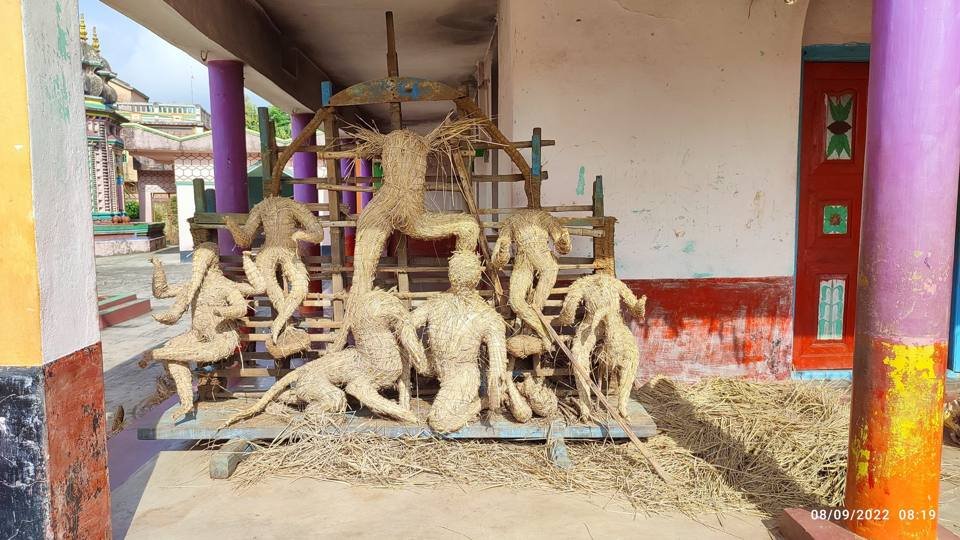
Before the Puja
Agomoni
The welcome of Maa Durga. Songs and prayers of arrival, as she comes to her home for the Puja.
ॐ या चण्डी मधुकैटभादिदैत्यदलनी या माहिषोन्मूलिनी ।
Read more →
Welcome to Maa Durga Samity, Kashmar
Tap to enter
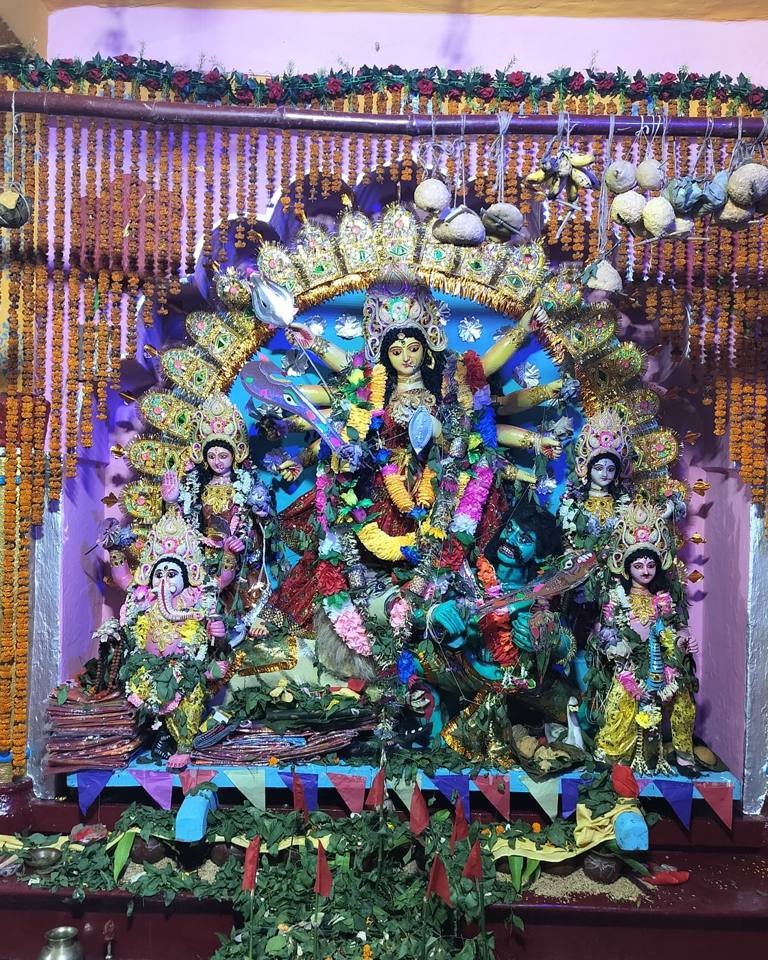
Radhacharan Kuleshwari Devi Durga Mandir stands in Kashmar. The temple was established in Ashwin 1314 (October 1907), and Maa Durga has been worshipped here ever since. We are only her devotees — it is her grace that has carried the Puja from one generation to the next.
This page is a humble offering at her feet: photographs, videos and stories from each year's Puja, kept so that those who could not be here can still receive her blessings. Every year has its own Parikrama, a little book you can turn page by page.
Here the Puja unfolds through its rituals: Agomoni, Belboron, Nabapatrika Snan, Sandhi Puja and finally Mayer Biday on Dashami, with daily puja from Shashthi to Dashami.
Each year the Puja moves through the same sacred steps, with Maa worshipped every day from Shashthi to Dashami. This is a short outline; the elders will add the fuller stories and the way each ritual is kept here.
The welcome of Maa Durga. Songs and prayers of arrival, as she comes to her home for the Puja.
ॐ या चण्डी मधुकैटभादिदैत्यदलनी या माहिषोन्मूलिनी ।
Read more →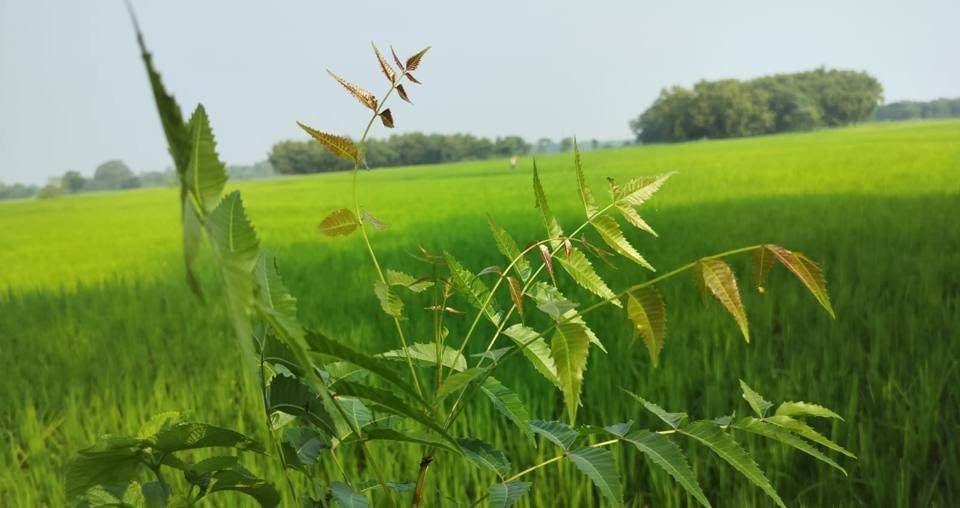
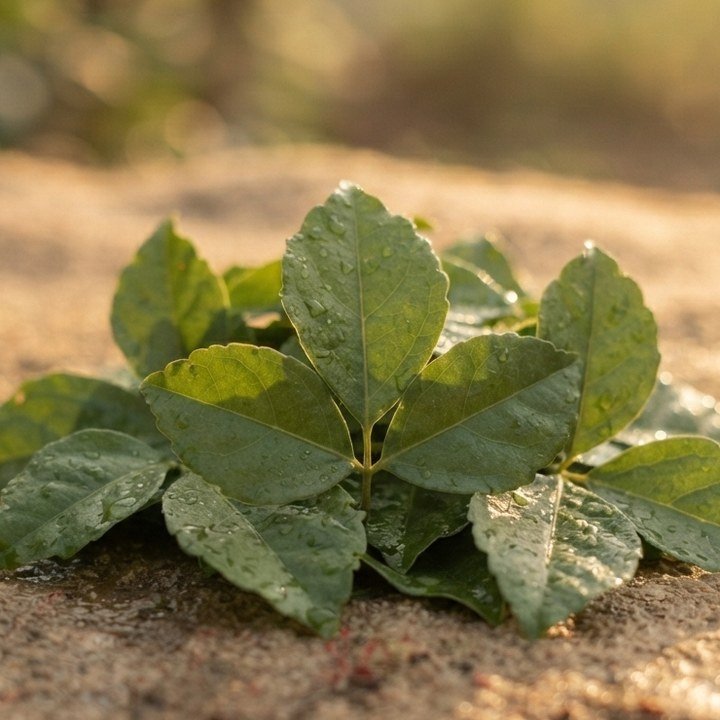
Maa is welcomed at the bel tree — the beginning of the Puja.
ॐ ऐं रावणस्य वधार्थाय रामस्यानुग्रहाय च ।
Read more →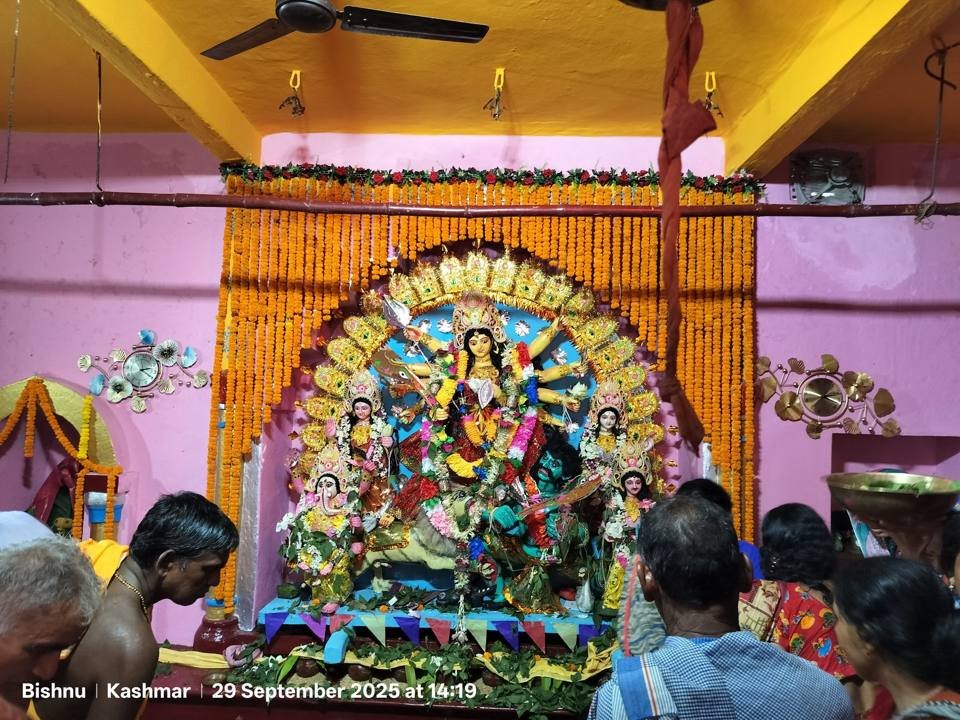
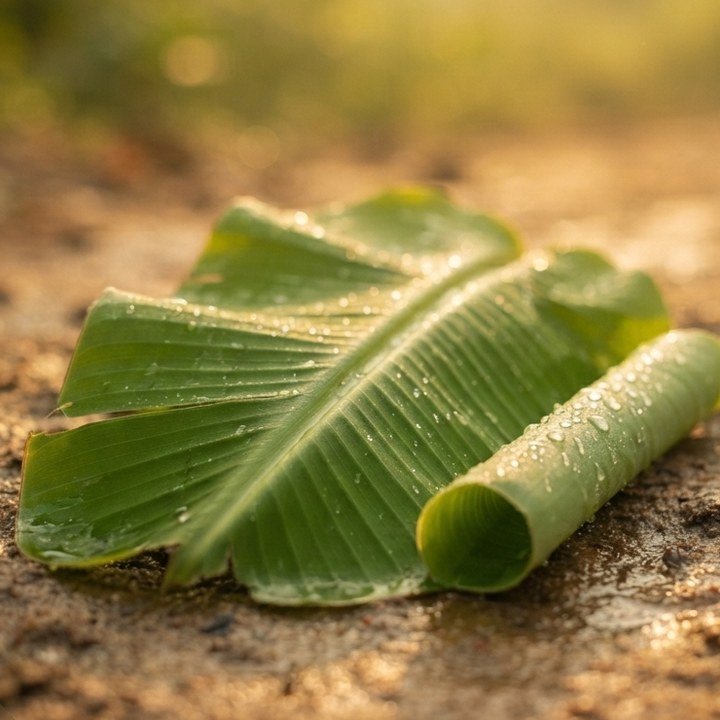
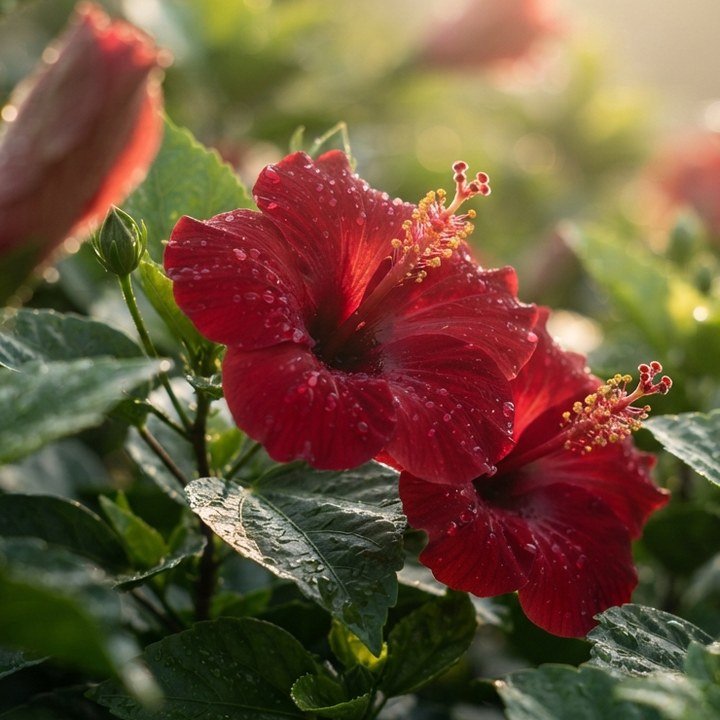
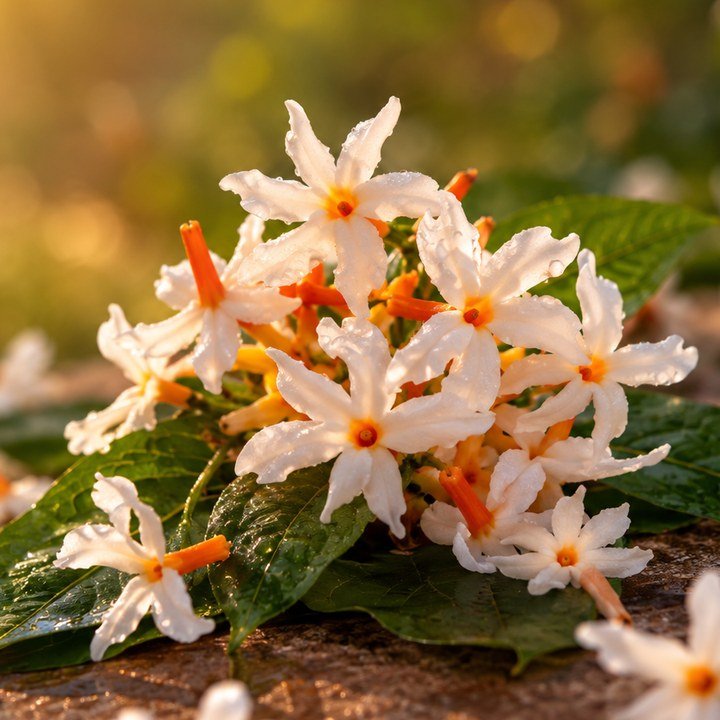
The sacred bath of the Nabapatrika, the nine plants that are worshipped as Maa Durga herself.
ॐ रम्भा कच्वी हरिद्रा च जयन्ती बिल्वदाडिमौ ।
Read more →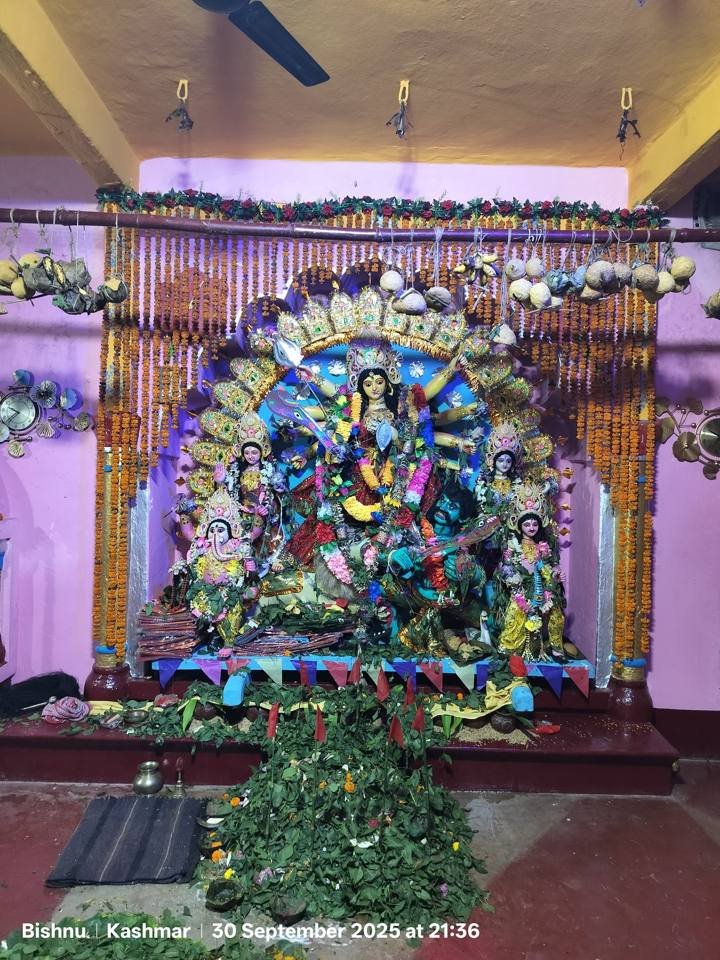
The special worship at the sacred moment where Ashtami meets Nabami.
ॐ सर्वस्वरूपे सर्वेशे सर्वशक्तिसमन्विते ।
Read more →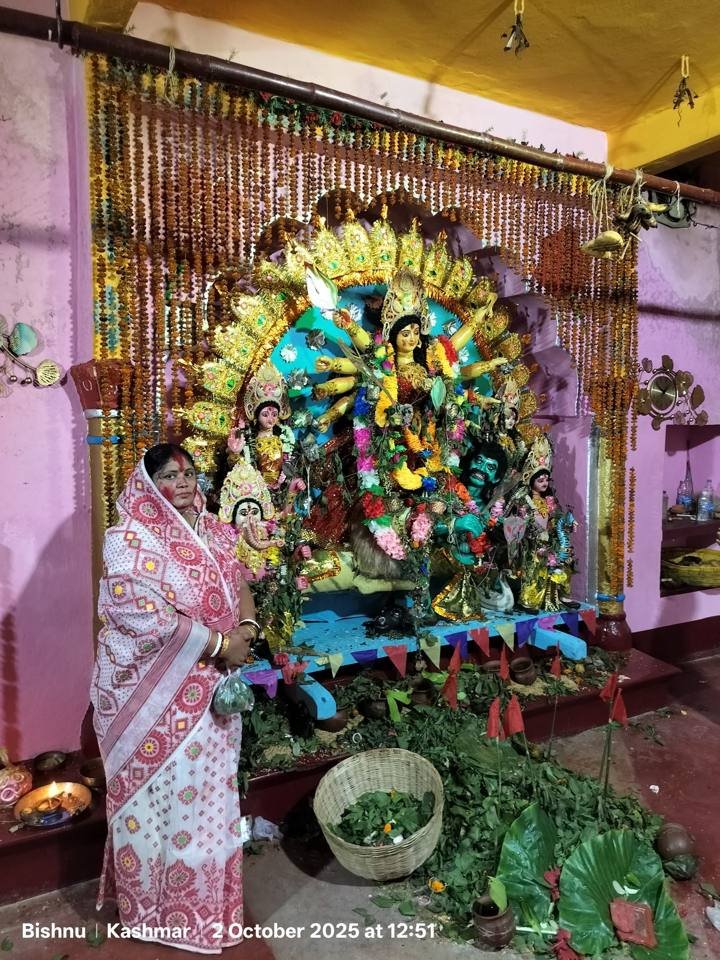
The farewell to Maa on Dashami. With love and tears we send her back, and ask her to come again next year.
ॐ इत्थं यदा यदा बाधा दानवोत्था भविष्यति ।
Read more →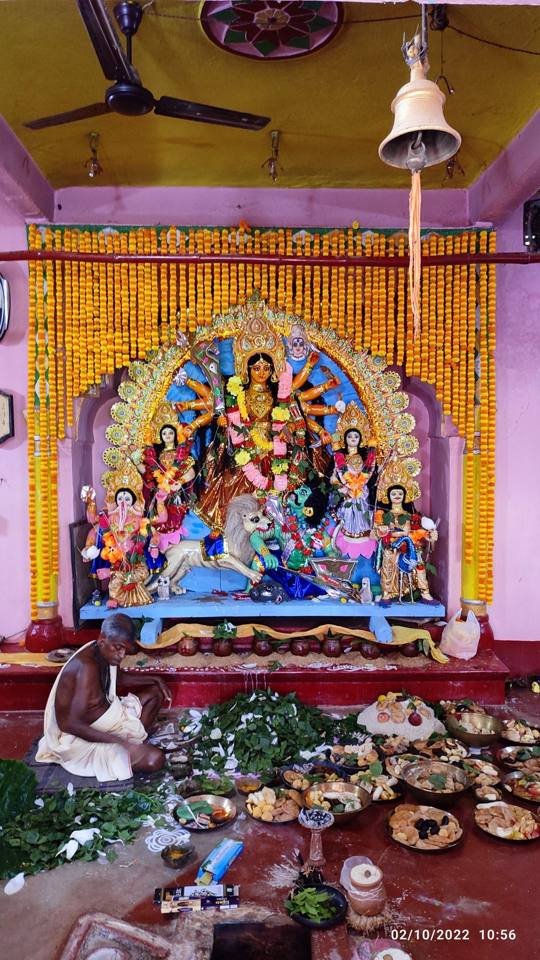
Through all the days of the Puja, Maa Durga is worshipped every day at the temple.
ॐ जयन्ती मङ्गला काली भद्रकाली कपालिनी ।
Read more →The old stories of Maa Durga that we grow up hearing. The elders will add more, in their own words.
When the demon Mahishasura grew so powerful that even the gods could not stop him, they gave their strength to Maa Durga. Riding a lion, she fought for many days and, on the day of Dashami, she won. That is why we celebrate Vijaya, the victory of goodness.
सर्वबाधाप्रशमनं त्रैलोक्यस्याखिलेश्वरि । एवमेव त्वया कार्यमस्मद्वैरिविनाशनम् ॥O queen of all, calm every trouble of the three worlds, and in just this way destroy our enemies.
— Devi Mahatmya 11.38
We ask Maa to calm every trouble in the world and to remove what harms us. For example, it is like the whole village coming together to clear a road that has been blocked by a fallen tree.
In Bengal we think of Durga as Uma, a daughter who comes home for a few days each autumn with her children, Lakshmi, Saraswati, Ganesha and Kartik. That is why the Puja feels like a family homecoming, and why the farewell on Dashami brings tears.
या देवी सर्वभूतेषु मातृरूपेण संस्थिता । नमस्तस्यै नमस्तस्यै नमस्तस्यै नमो नमः ॥To the Goddess who dwells in all beings in the form of a mother: salutations to her, again and again.
— Devi Mahatmya 5
Maa lives in everyone as a mother: the love that feeds, protects and forgives. For example, a mother staying awake all night beside a sick child is Maa's love at work.
Maa Durga is shown with ten arms, each holding a weapon given by a different god. They remind us that when all good strengths come together, no darkness can stand against them.
देव्या यया ततमिदं जगदात्मशक्त्या निःशेषदेवगणशक्तिसमूहमूर्त्या । तामम्बिकामखिलदेवमहर्षिपूज्यां भक्त्या नताः स्म विदधातु शुभानि सा नः ॥By whom this world is filled with her own power, embodied as the gathered strength of all the gods: to that Ambika, worshipped by all gods and sages, we bow in devotion. May she bring us all that is auspicious.
— Devi Mahatmya 4.4
Maa's power is the combined strength of all the gods. When good forces join together, nothing can stand against them. For example, it is like villagers pulling one rope together: a load that no one could move alone begins to move.
A few of the verses in praise of Maa Durga, from the Devi Mahatmya (Chandi). The elders will add the mantras used in each ritual here.
या देवी सर्वभूतेषु शक्तिरूपेण संस्थिता । नमस्तस्यै नमस्तस्यै नमस्तस्यै नमो नमः ॥
सर्वमङ्गलमाङ्गल्ये शिवे सर्वार्थसाधिके । शरण्ये त्र्यम्बके गौरि नारायणि नमोऽस्तु ते ॥
सृष्टिस्थितिविनाशानां शक्तिभूते सनातनि । गुणाश्रये गुणमये नारायणि नमोऽस्तु ते ॥
जयन्ती मङ्गला काली भद्रकाली कपालिनी । दुर्गा क्षमा शिवा धात्री स्वाहा स्वधा नमोऽस्तु ते ॥
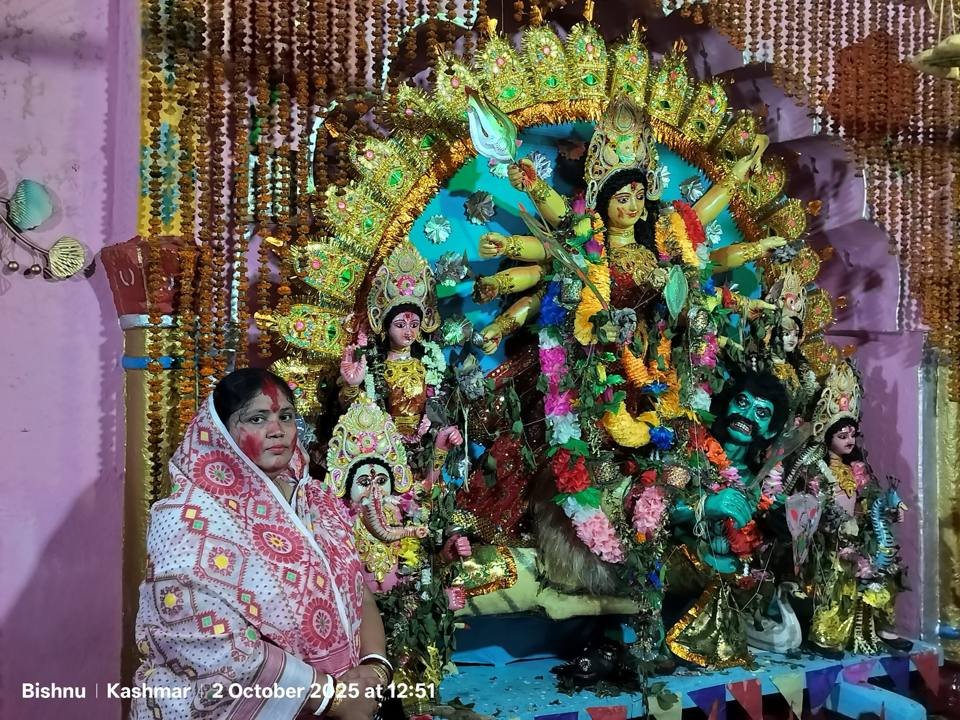
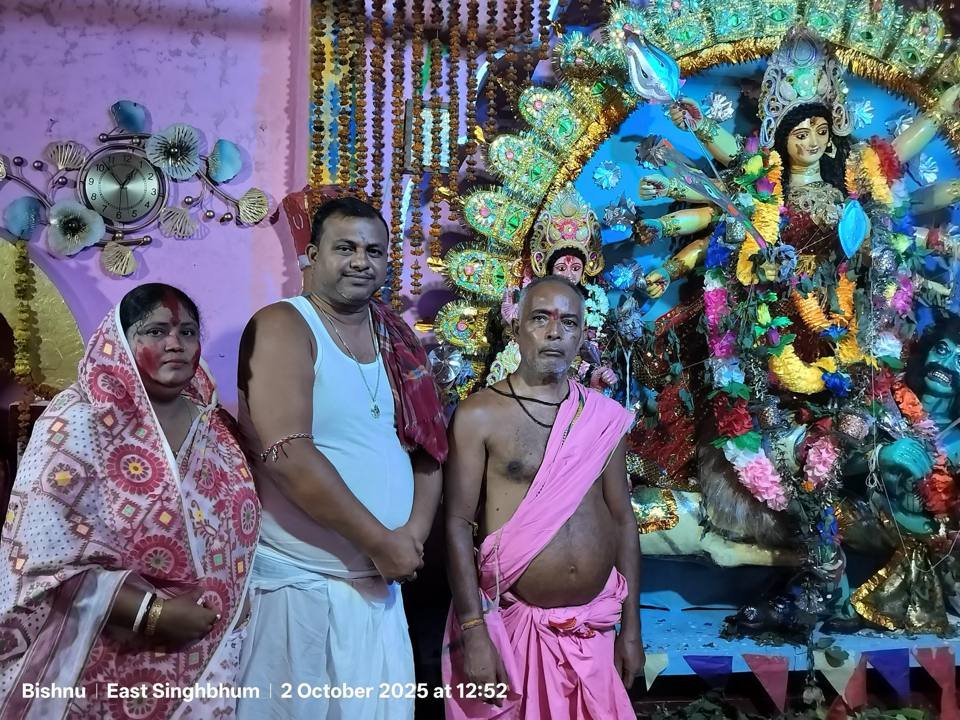
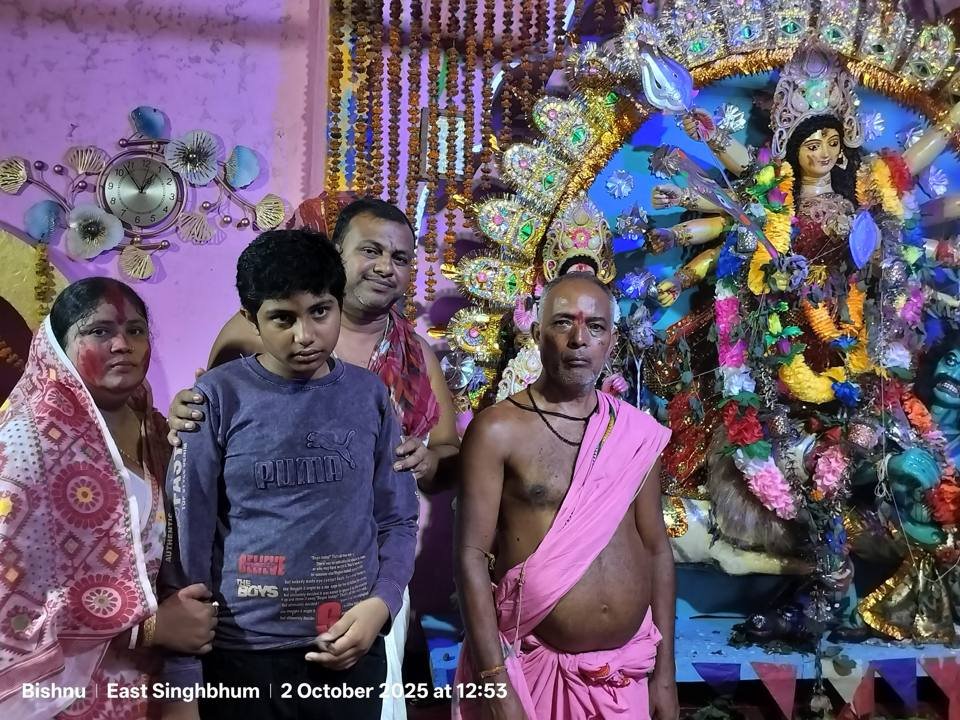
Photographs from recent years at the temple and in the village. Every year the gallery grows.
These dates are worked out from the moon and the sun, and they move forward by themselves every year. The local almanac has the final word, and the admin can correct any date here.
The dawn of the Devipaksha. Maa Durga is called to come.
Maa is welcomed and the Puja begins.
The sacred bath of the Nabapatrika.
Worship at the meeting of Ashtami and Nabami.
The ninth day of the Puja, the last full day of worship before the farewell.
The farewell to Maa, until she comes again.
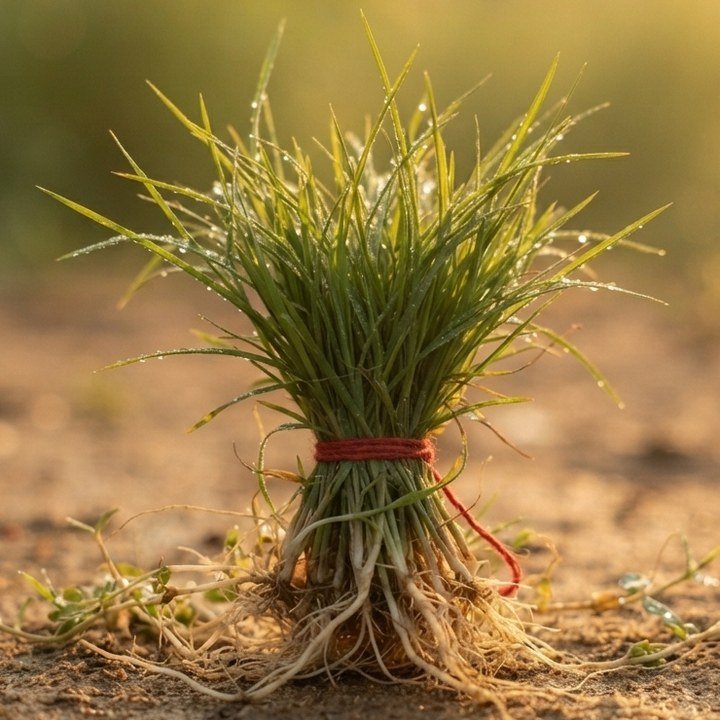
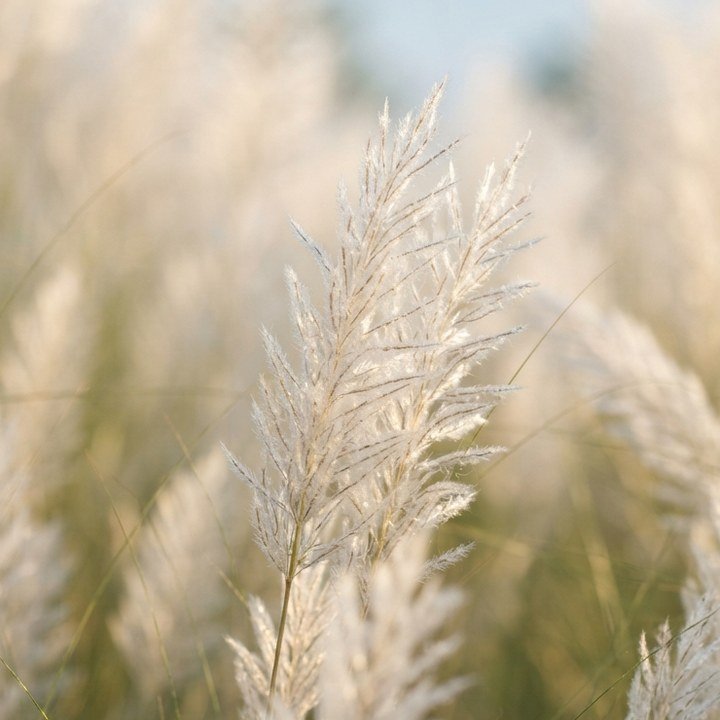
Kash flowers on the village paths, young leaves in the sunlight and paddy fields turning green — this is the season in which Maa Durga arrives. These photographs were taken in and around the village.
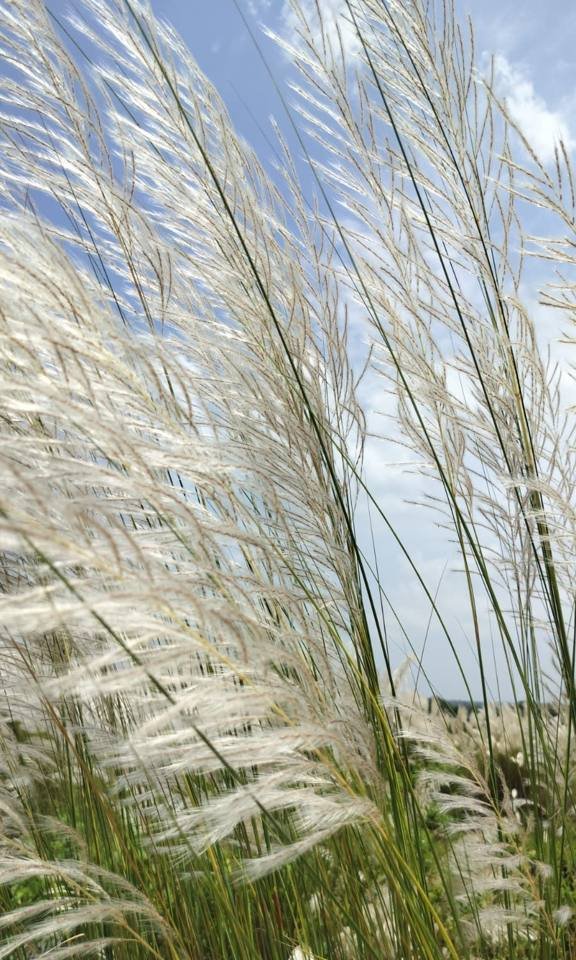
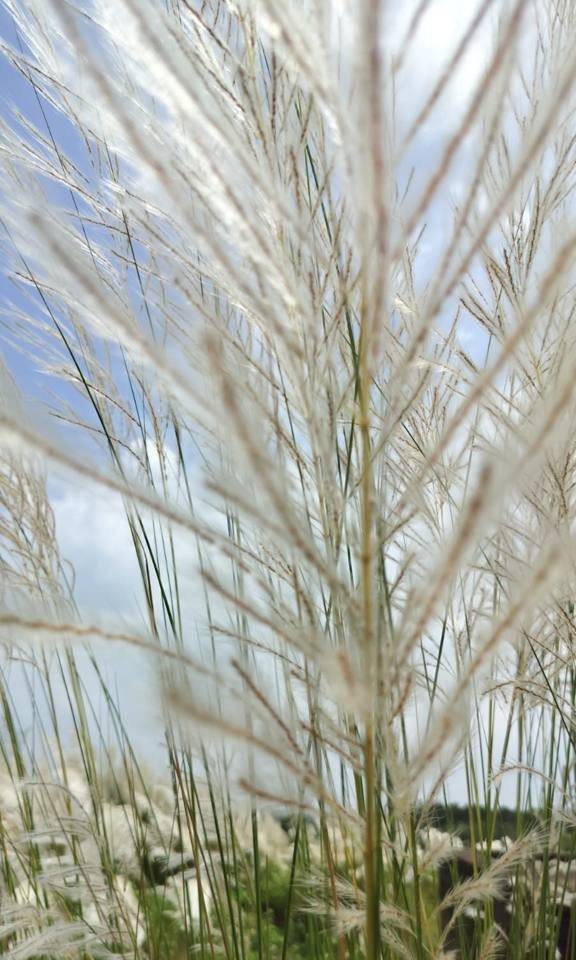
Our new website is ready and waiting behind the scenes — it opens to everyone the moment Maa arrives this Durga Puja.
ইয়া চণ্ডী মধুকৈটভাদিদৈত্যদলনী
ইয়া মাহিষোন্মূলিনী
ইয়া ধূম্রেক্ষণচণ্ডমুণ্ডমথনী
ইয়া রক্তবীজাশনী
Ya Chandi Madhukaitabhadi-daitya-dalani, Ya Mahishonmoolini, Ya Dhumrekshana-Chanda-Munda-Mathani, Ya Raktabeejashani, Shakti Shumbha-Nishumbha-daitya-dalani, Ya Siddhidatri Para, Ya Devi Navakoti-murti-sahita, Maa Paatu Bishweshwari.
She who destroyed the demons Madhu and Kaitabha, who uprooted Mahishasura, who slew Chanda and Munda, who consumed Raktabija's legions, and who ended Shumbha and Nishumbha — that same Shakti, giver of all accomplishment, present in nine crore forms — may that Devi, Mistress of the Universe, protect us.
Checking status…